
Start a Pottstown Residents Search
Use the record that fits the information already known. An address is best handled through Montgomery County Property Records, then through the Recorder of Deeds if a dated transaction matters. A name with a possible court connection belongs in the Pennsylvania UJS Case Search, where court, docket, dates, and parties help separate people with similar names. For an older household, ask the Pottstown Regional Public Library or Pottstown Historical Society about directories, newspapers, and related local collections. Each source has a boundary. A property card concerns a parcel and an owner representation, while a directory can provide period context for a household.
There is no verified public master roster for every Pottstown household. Official sources work best as a trail of separate facts. Start broad, record the exact date or record identifier, and confirm an important connection with the office that keeps the underlying record.
- Enter a known address in Montgomery County Property Records and note the parcel ID, situs address, and owner representation.
- Use that parcel, address, or party information in the Recorder’s Public Access System to locate a recorded instrument.
- For a specific public court matter, search UJS Case Search and compare the docket, court, dates, and case type.
- For a historical household, check Pottstown city directories and newspaper microfilm through the library or historical society.
- When an agency record is not posted, send a specific written request to the actual custodian under the Pennsylvania Right-to-Know Law.
Note: A matching name is only a lead; a parcel number, docket number, or document placement makes later verification more reliable.
Pottstown Record Keepers
Pottstown is a borough in Montgomery County, so the useful resident-record trail is shared among borough, county, and state custodians. The County property portal supplies the current parcel view. The Recorder preserves the recorded land instruments that can be followed back through a title chain. The Register of Wills handles local marriage licensing and estate matters. Borough offices add defined local channels for permits, tax certifications, meeting files, and public-record requests. They are evidence for a stated property or public action, not a general residents list.
Montgomery County Recorder of Deeds
425 Swede Street, third floor
Norristown, PA
610-278-3289
Montgomery County Property Records
County assessment and parcel records
Montgomery County, PA
610-278-3761
Pennsylvania Voter Services
Individual registration-status route
Pennsylvania
1-877-VOTESPA
The Montgomery County Archives is a separate historical channel. Walk-ins are welcome at 86 Eagleville Road, but the Archives does not certify documents. It can be the better route for microfilm or pre-1906 county birth and death material when a current portal does not carry the needed record.
Pottstown Parcel-to-Deed Trail
The County property portal is the present-tense starting point for a Pottstown address. Its public navigation offers address, parcel, advanced, map, and sales search. Owner-name search has been removed. The portal’s own disclaimer says its parcel data and imagery are informational and visual tools, not a title search. Treat the parcel ID as the handoff: it connects the current address work to the Recorder’s index, where an instrument, book and page, or document reference supplies dated placement.
Use the official Property Records home before moving to the deed index. The image shows the County’s property-search entry point. It is useful for selecting a route by address or parcel, but a property screen alone does not establish every person who has lived there.
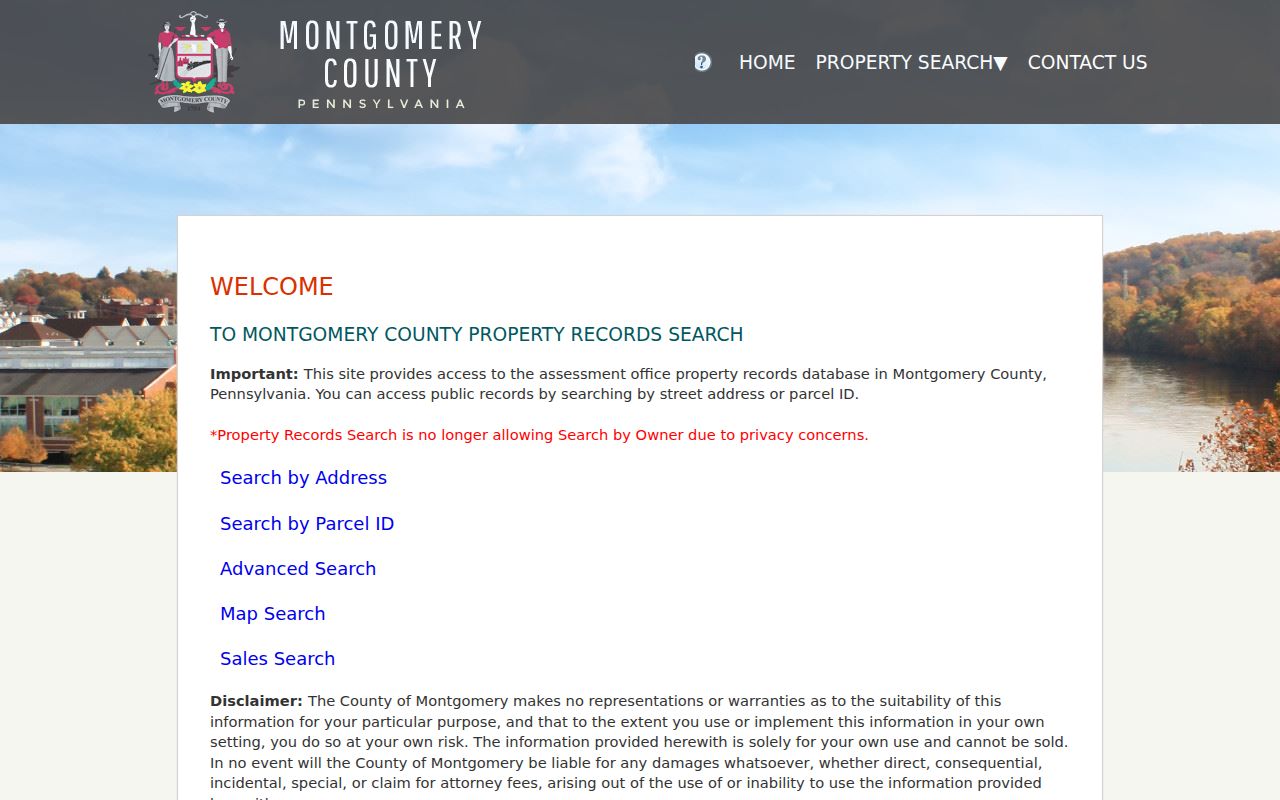
Once the parcel facts are recorded, the Recorder can supply the documented transaction trail. A tax mailing address, if shown on a parcel card, may differ from the situs and must not be described as a current occupant address.
| Property Records control | Use in a Pottstown search | Limit |
|---|---|---|
| Search by Address | Find a present parcel from a street address | Not a title determination |
| Search by Parcel | Use the County’s unique parcel identifier | Does not name all occupants |
| Map Search | Locate a parcel visually | Imagery and parcel data may not align |
| Sales Search | Review the portal’s sales pathway | Verify the recorded instrument separately |
Pottstown Recorder Search Details
The Recorder’s Public Access System requires an account before a user chooses Search Public Records. The office documents name, address, parcel ID number, and other criteria. A search result directs the user toward a recorded instrument, not toward a current-residency conclusion. Remote image viewing is a separate paid layer, while public office computers provide a free search alternative. The Recorder does not conduct searches by telephone, though staff may give general information.
| Documented field or action | Type | Access note |
|---|---|---|
| Name | Text criterion | Can be combined or narrowed |
| Address | Text criterion | Include municipality for a mailed request |
| Parcel ID Number | Text criterion | County’s unique property identifier |
| Book / Page | Placement search | Useful for a specific copy request |
| Save Image / Print Image | Document action | Requires subscription or payment |
Recorder-held material includes deeds, mortgages, satisfactions, plans, powers of attorney, and related instruments. The office says the corpus begins September 10, 1784, but that span does not make each image free. A mail request needs the owner name, street address with municipality, parcel ID, book/page if known, caller contact, and a self-addressed stamped envelope. The counter, precise mail route, and County Archives remain useful access channels.
- Parcel
- A County identifier for a piece of property, used to connect assessment and recorded-document work.
- Index
- A finding tool that points to a record; it is not always the record image itself.
- Criss-cross directory
- A historic street-address directory arranged to help identify the listed household or business at an address.
- Situs address
- The physical property address, which can differ from a tax mailing address.
Note: The Recorder reports missing deed, mortgage, and plan book numbers, so a gap should be checked rather than assumed to prove no record exists.
Current Pottstown Resident Sources
Current resident sources do not all list the same people or prove the same facts. Property Records represents a parcel and present assessment data. The Recorder’s index identifies parties to recorded documents. The voter-status tool is for an individual checking their own registration, while voter-list access is regulated. Borough staff pages identify municipal contacts, not private residents. Reading each source at its proper level prevents a property owner, public official, or past document party from being mistaken for a current household member.
| Pottstown source | What it can confirm | Custodian | Access route |
|---|---|---|---|
| Property Records | Parcel, assessment, current owner representation | Montgomery County | Address, parcel, map, or sales pathways |
| Recorder index | Recorded-document parties and placement | Recorder of Deeds | Account, counter, or mail copy route |
| Voter services | Individual registration status | Pennsylvania / County | Self-status tool, County office, or phone |
| Borough staff directory | Municipal officers and department contacts | Pottstown Borough | Official staff directory |
| Library and historical collections | Period directory and newspaper context | PRPL and PHS | Catalog, inquiry, appointment, or visit |
A person-specific confirmation needs its own verification path. The Pottstown resident lookup page concentrates on matching one name to the appropriate official record without treating any single index as a complete profile.
Pottstown Voter Records Limits
Pennsylvania’s official voter-status route is individual-facing. A voter can use Find Voter Registration Status, contact the County voter-registration office, or call 1-877-VOTESPA to check their own registration. The checker’s live field labels were not captured in the research, so they are not represented as a fixed public search form here.
The screenshot is the official state voter-status entry. It supports a voter’s own status check, not a free Pottstown directory of names at addresses.
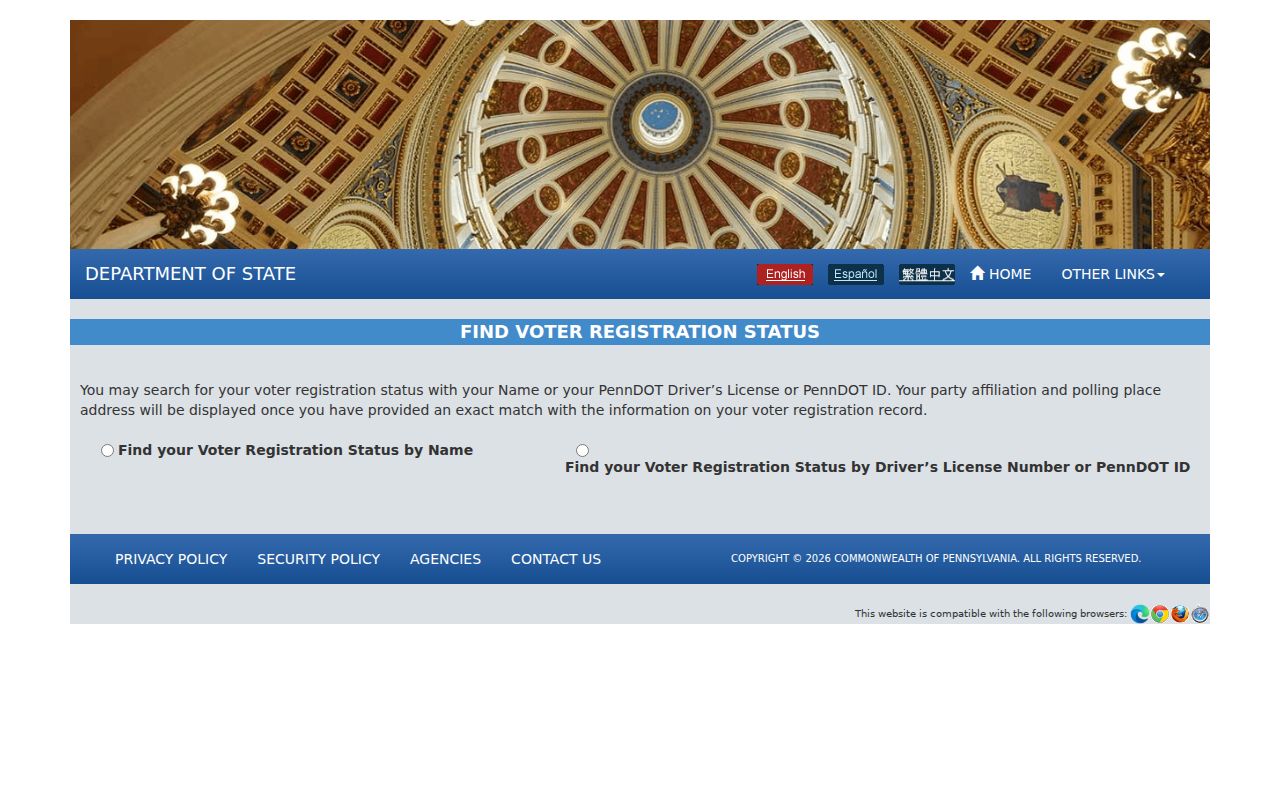
Election Code sections 1207 and 1404 make certain registration records and street lists subject to inspection or controlled list access. A requester must show identification and provide a written permitted-use statement before inspecting a public information list or receiving elector names and similar information. The State request form offers listed products for Montgomery County, but use is restricted to elections, political activity, or law enforcement and Internet publication is barred under the cited rules.
Pottstown Court Record Checks
Pottstown is in Montgomery County’s 38th Judicial District. The Pennsylvania Unified Judicial System’s Case Search is the public entry for docket sheets, calendars, and case information entered in UJS-supported systems. It offers search and advanced-search pathways, then uses identifiers and court filters to narrow an inquiry. A same-name result must be checked against the caption, court, dates, parties, case type, and disposition before it is associated with a particular person.
The official UJS search interface is shown below. Court records can help verify a specific public case, but a docket is not a general Pottstown resident list.
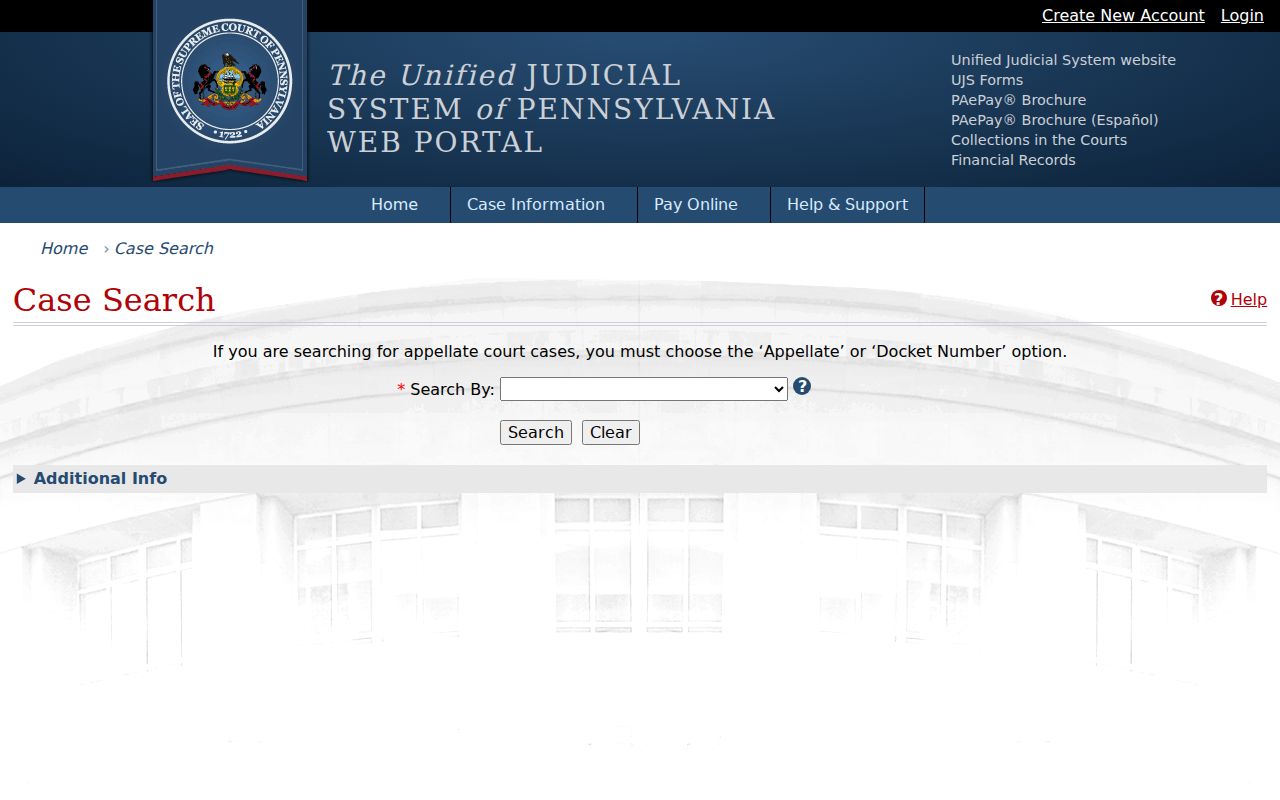
The electronic-record policy keeps important information out of public web case records, including Social Security and driver-license numbers, victim, informant, juror, and witness-contact information, many party street addresses, financial credentials, sealed or protected records, and unexecuted warrants. A no-result or a redacted field should never be treated as proof that no other record exists.
Pottstown Vital Record Split
Birth and death records are kept by different custodians depending on the date. The Pennsylvania Department of Health Division of Vital Records is the statewide custodian for births and deaths from 1906 forward. The County Archives is the practical local path for county birth and death material before 1906. Marriage records belong with the licensing county’s Register of Wills, while divorce records are held by the court rather than the Department of Health.
Public-age access has firm limits. Pennsylvania birth certificates become public after 105 years and death certificates after 50 years. A certified current birth record is not a general name index and is limited to eligible requesters. The proper route is the Pennsylvania Vital Records program or the relevant county custodian, depending on the record type and date.
Pottstown Borough Request Routes
Some useful local material is not in a searchable portal. Pottstown’s government page directs the public to agendas, minutes, boards, code, Right-to-Know material, and voting information. For a defined Borough record, the Right-to-Know request should name the document, property, date range, or decision sought. Borough inspection is normally at Borough Hall during weekday 9 a.m. to 4 p.m., excluding holidays, with a designated employee present. The Borough policy gives a 15-day appeal notice for a denial or deemed denial.
Read the Pottstown Borough Government page before selecting the responsible department. The visual below is an official entry point for government records, meetings, and Right-to-Know materials. It is a contact and records-request channel, not a resident search tool.
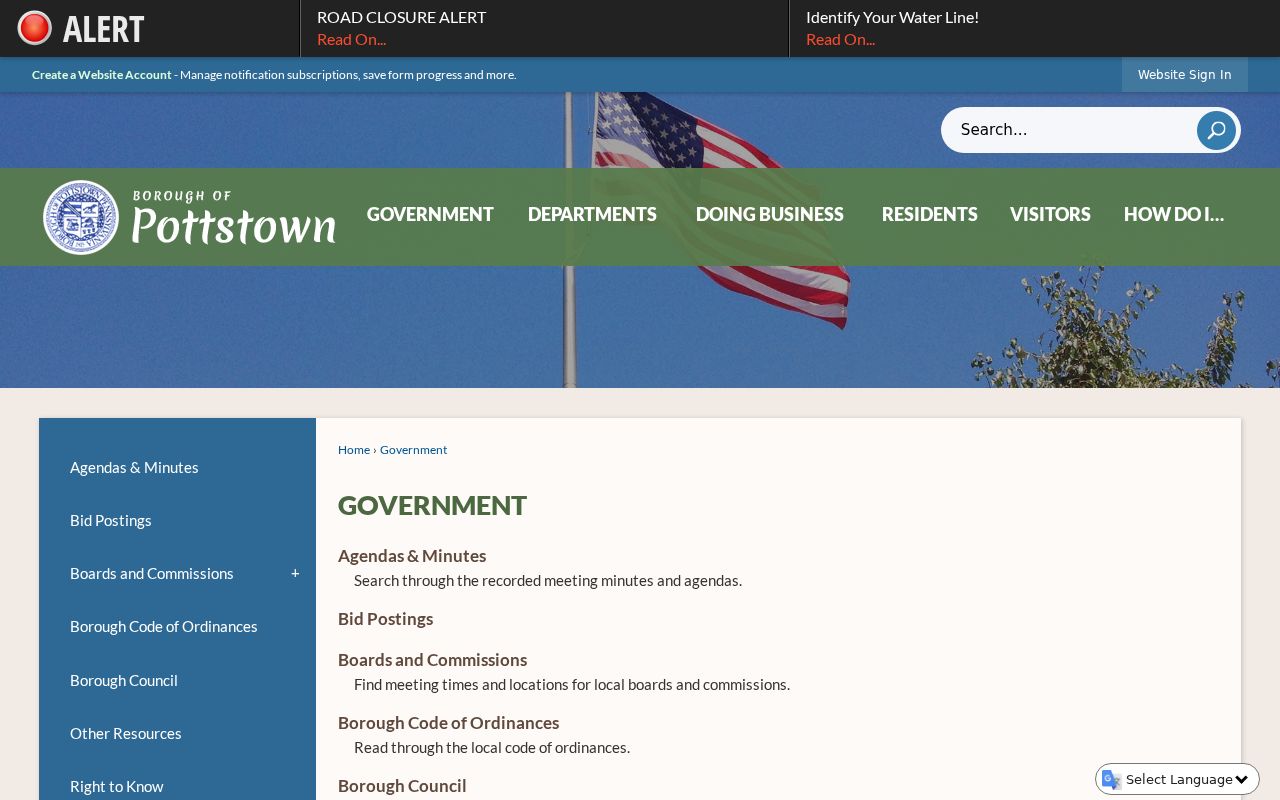
The Pennsylvania Right-to-Know Law is Act 3 of 2008, 65 P.S. §§ 67.101–67.3104. Agencies ordinarily respond within five business days under 65 P.S. § 67.901, although a timely written interim response can extend the process for listed reasons. Ask for records, not an open-ended investigation of a person.
Privacy in Pottstown Records
Public access has limits that matter in any Pottstown residents search. The Pennsylvania Address Confidentiality Program gives eligible survivors a substitute mailing address for specified public systems, and its actual addresses and application information are confidential. Driver and vehicle data are governed by the federal Driver’s Privacy Protection Act and Pennsylvania restrictions. Protected court information and restricted voter access cannot be bypassed through a different local office.
Lawful personal use. Use Pottstown records for personal, civic, family-history, estate, or anti-scam questions. Do not use a name, address, or record trail to stalk, harass, intimidate, or harm anyone.
For an address-confidentiality question, the Office of Victim Advocate’s ACP enrollment information is the official starting point. Correcting or verifying a record also means contacting the custodian, because no third party can reliably override an official office’s current data.
Pottstown Historical Directory Shelf
Pottstown’s historical directory trail has several physical and digital starting points. The Pottstown Historical Society identifies Pottstown City Directories, church histories, borough tax and legal records, Pennsylvania records, family histories, and selections of the Montgomery Ledger and Pottstown Mercury. The library’s microfilm finding aid lists local newspaper material from 1829 to 2013, with a bulk run from 1933 to 2013, and Pottstown Area Necrology Books 1 through 3 with an index for 1878 to 1922.
A Library of Congress guide identifies a 1950 Pottstown criss-cross or street-address directory, and a digitized 1940 to 1948 telephone-directory page displays a period pattern of surname, initial, residence indicator, abbreviated address, and telephone number. These sources document a date-specific listing. They do not establish current residency. The Pottstown directory book page takes up the holdings, entries, and household tracing in more detail.
Pottstown Council Minutes Story
Historical records in Pottstown reach across different eras and custodians. Pottstown began as Pottsgrove before 1800 and was incorporated on February 6, 1815. The Recorder’s land-record reach begins in 1784. The Pennsylvania Historical and Museum Commission lists seven digitized rolls of Pottstown Borough Council Minutes from 1819 to 1951. Council material can place a property project or public action in time, while land documents, directories, and newspapers provide other layers of a local history question.
The PHMC municipal-record guide documents the digitized council-minute collection. Minutes identify municipal business and should not be treated as a population roll.
A historical address may also need its legal description, lot context, maps, and adjacent streets. Pottstown’s documented annexations occurred in 1930, 1942, 1962, and 1966. Those facts help explain why an address search and a municipal-boundary question are not always the same inquiry.
Pottstown Official Scam Warnings
Official sources are safer than unsolicited offers to supply a deed, title record, or court payment. Montgomery County warns that private deed and title-copy solicitations are not County endorsed. The PA Attorney General issued February 2026 alerts about messages impersonating municipal courts and potential property-ownership scams. A suspicious message should not be verified by its link or number. Use the Recorder’s official copy route, contact the court or office independently, and preserve the actual document placement before paying for a copy.
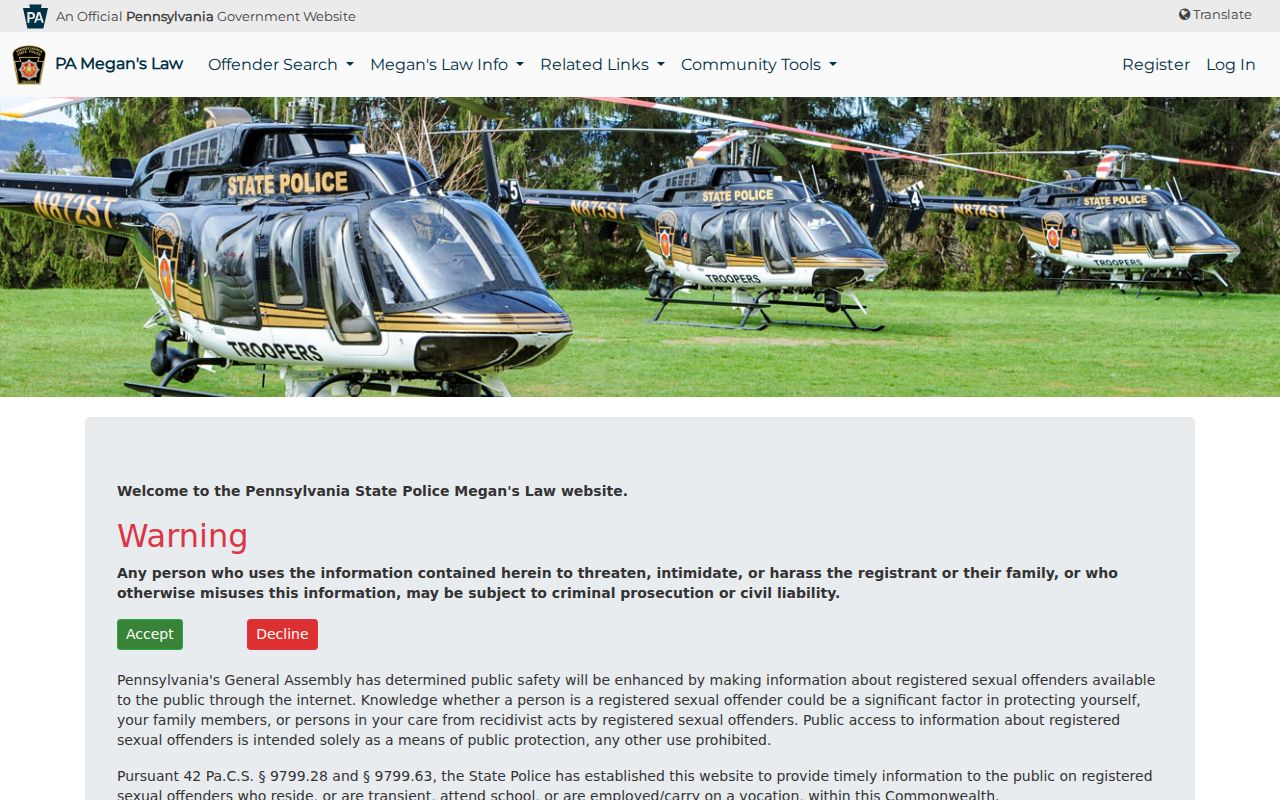
The Pennsylvania State Police Megan’s Law Public Website is a statutory public registry with its own terms and use warnings. The screenshot marks the official entry point. It is not a broad Pottstown residents directory and its information should be handled only within the registry’s stated rules.
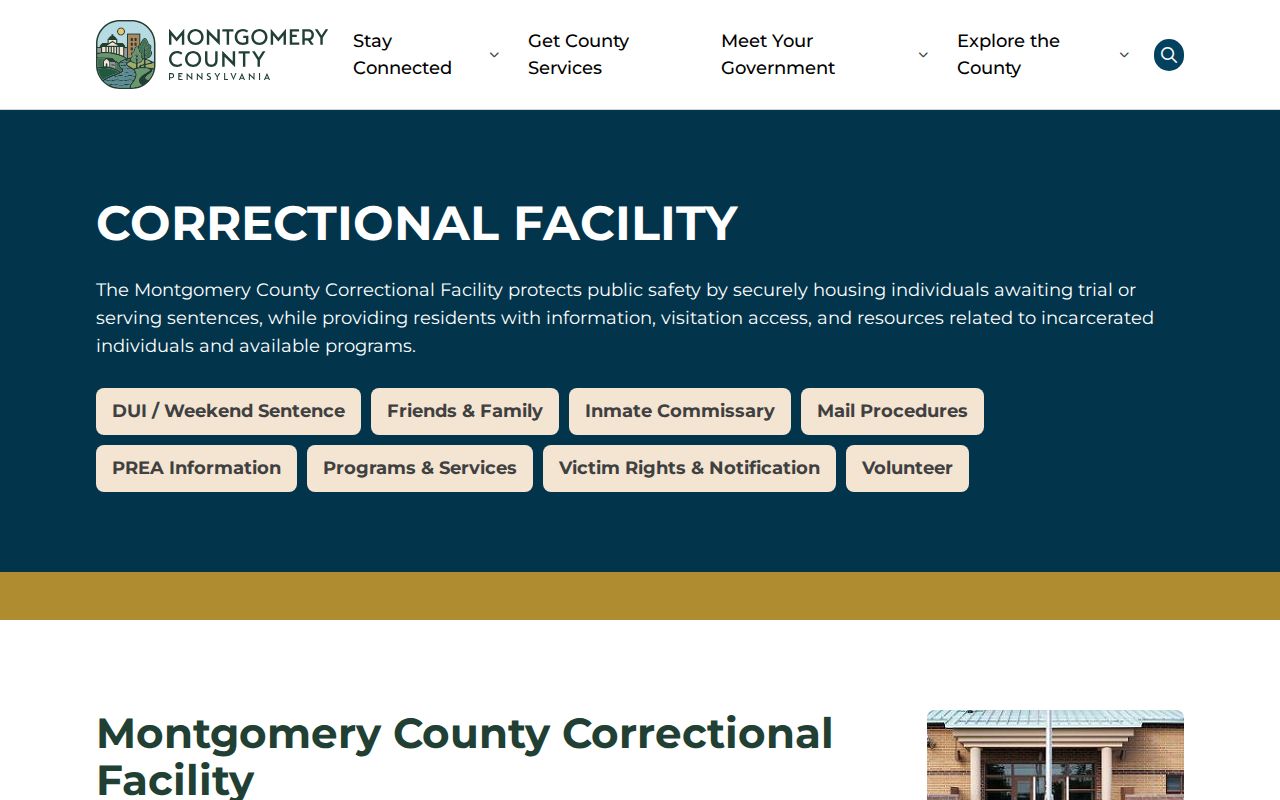
For a county-facility question, the Montgomery County Correctional Facility page provides a contact route at 60 Eagleville Road and 610-635-7100 option 2. No official public searchable county jail roster was located. The image confirms a facility contact page, not a person-search result.
State-sentenced people and parolees have a different official path through the Pennsylvania inmate and parolee locator, which does not cover county facilities or people held out of state.